When One Brand Isn’t Enough: The Strategic Thinking Behind a Sister Brand
Many business owners assume branding is something you do once.
You create a logo, launch your website, and your brand is set.
But as businesses grow and evolve, something interesting often happens: the audience changes. OR you find you have two different audiences.
That was exactly the situation Abbie Miller found herself in.
Abbie is the photographer behind Stories Framed Photography, a successful business known for beautiful senior portraits, family photography, and professional headshots.
She began to realize that the clients that came to her for high school senior and family portraits were different from the ones who were coming for professional or team photography.
Corporate teams, medical offices, law firms, and professional service organizations had very different expectations than families or high school seniors. They weren’t looking for sentimental storytelling. They were looking for polished, professional imagery that reflected their credibility.
The work was different.
The client was different.
And the brand needed to communicate something different for that segment of her business.
The Branding Question
Abbie had already built a strong reputation under the Stories Framed Photography name, but she began to notice a subtle disconnect.
When corporate clients encountered the brand, it didn’t immediately communicate the professional headshot experience she was offering. She wanted to make a clearer distinction between the two different sides of her business.
When Abbie came to me she had the idea of creating a sister brand specifically designed for her corporate headshot clients.
The goal wasn’t to replace Stories Framed Photography.
It was to create a second brand that could speak directly to this market while still feeling related to the original business.
That’s how Miller Headshot Co. was born.
Building a Brand That Speaks to the Right Client
When I work with clients, I’m not just designing a logo. I’m helping them think through how their brand communicates with the people they want to reach.
For Miller Headshot Co., there were three critical pieces we needed to establish.
1. A Clear Visual Direction
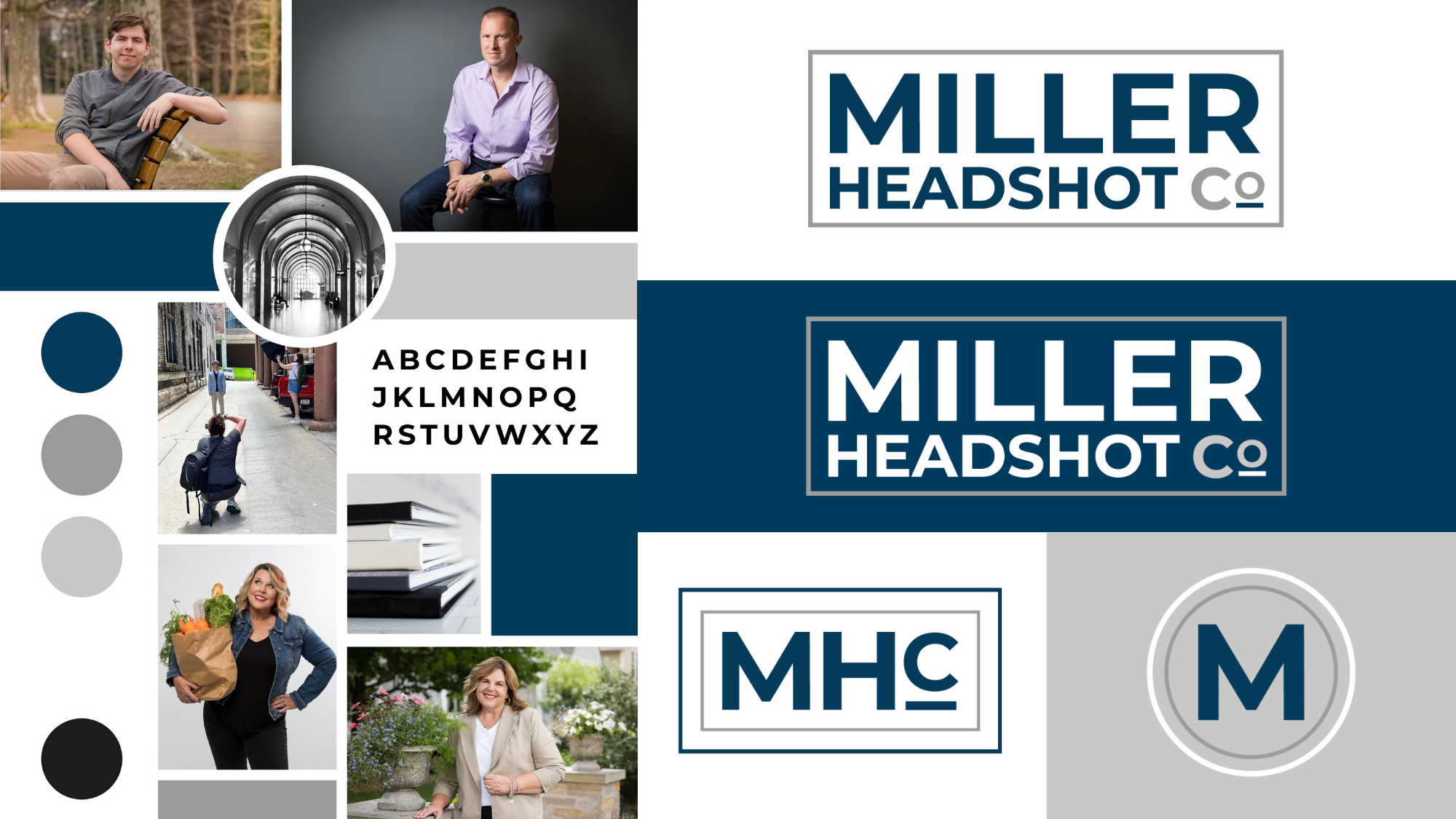
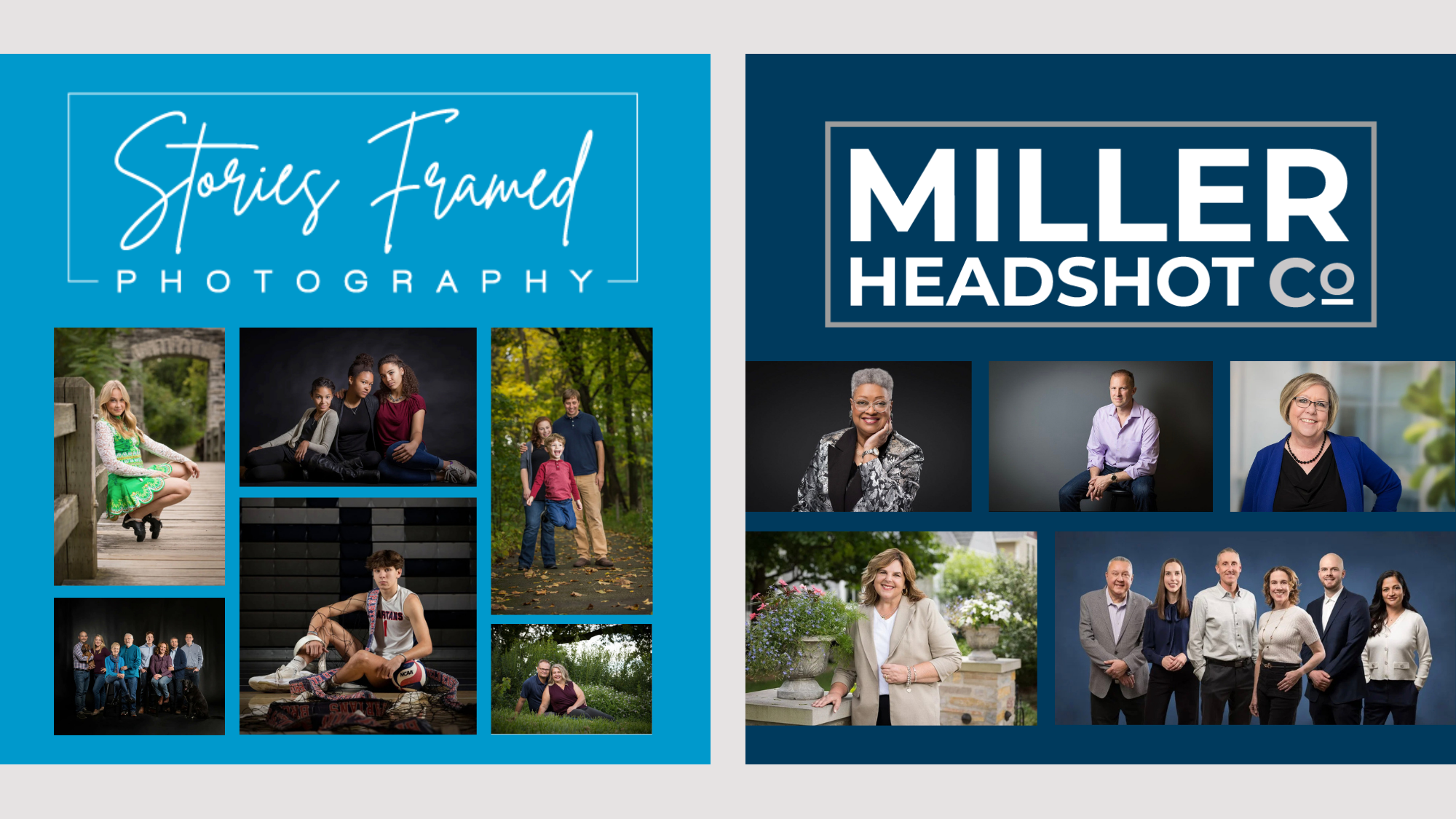
Stories Framed Photography uses a script-style logo that feels warm, personal, and family-oriented.
For Miller Headshot Co., we intentionally moved toward a clean sans-serif typographic approach. The structure and simplicity immediately communicate professionalism and credibility—qualities that resonate with corporate clients.
Even small decisions like typography signal the kind of experience someone should expect.
2. A Distinct but Related Color Palette
The new brand needed its own identity while still feeling like it belonged in the same family as Stories Framed Photography.
We developed a palette built around deep blue tones and neutrals—colors commonly associated with professionalism, stability, and trust.
This created a visual bridge between the brands: related enough to feel intentional, but distinct enough to clearly differentiate the services.
3. Real-World Application
A brand only works if it functions in the real world.
So instead of stopping at a logo, we explored how the brand would appear across the materials Abbie actually uses to run her business: proposals, website pages, and marketing materials.
Seeing the brand applied to these environments helps ensure the system works before it’s ever launched.
Why Strategic Branding Matters
One of the biggest misconceptions about branding is that it’s primarily about aesthetics.
In reality, branding is about clarity.
It helps the right clients immediately recognize that your business is built for them.
By creating Miller Headshot Co., Abbie was able to speak directly to corporate clients without confusing the audience that already loved Stories Framed Photography.
The two brands now work together:
Stories Framed Photography continues serving families and seniors.
Miller Headshot Co. speaks directly to professional organizations that need polished, consistent headshots for their teams.
Same photographer.
Same expertise.
But now each audience sees a brand designed specifically for them.
When a Second Brand Might Make Sense
Not every business needs multiple brands. But it can be the right solution when:
• You serve two distinctly different audiences
• Your services have very different positioning
• The existing brand creates confusion for one of those audiences
• You want to grow a new revenue stream without disrupting your current brand
When branding is approached strategically, it doesn’t just make a business look better - it helps the business grow. Abbie saw a 50% increase over last year at this time - after implementing this new brand focused at this area of her business.
Do you have a sister brand within your business? Reach out and let’s discuss the possibilities of building out one for your business.